Blockchain Development Services: Smart Contracts, DApps, and NFT Platforms Explained
A plain-language guide to blockchain development services for founders exploring smart contracts, DApps, NFTs, and wallet-based products.
Written and reviewed by the RubrixCode Editorial Team.
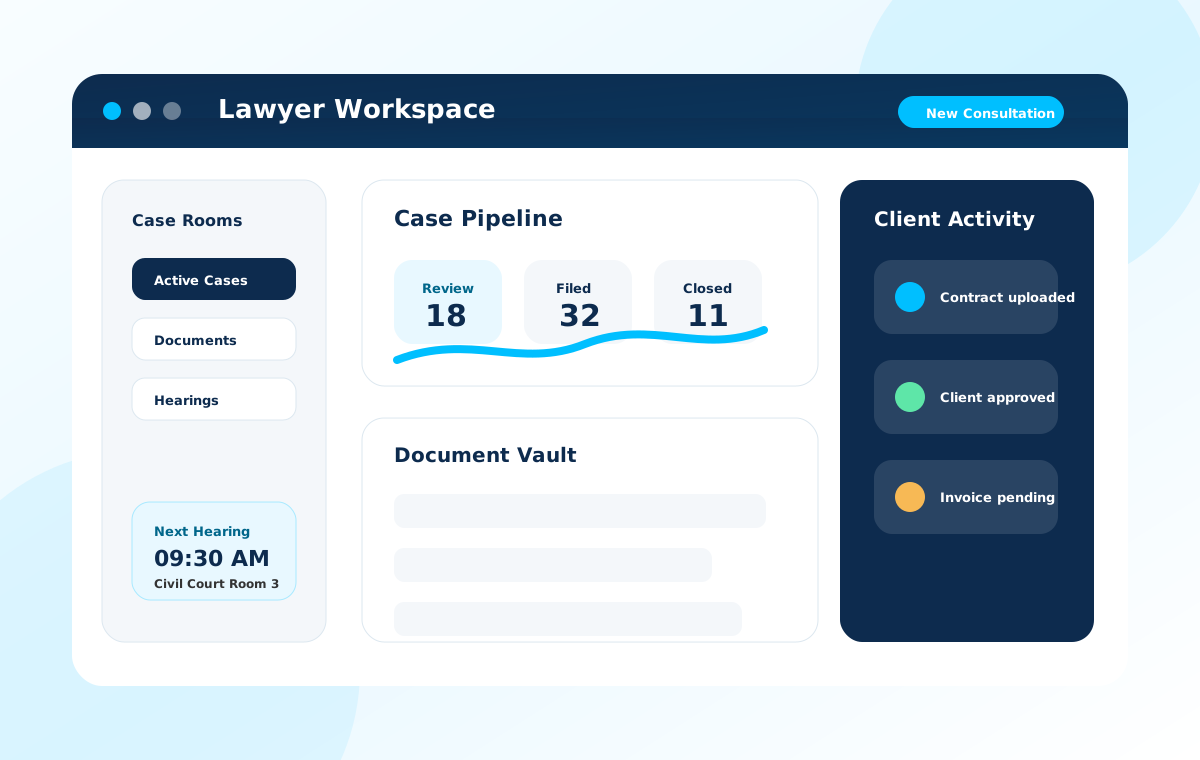
Blockchain development services can sound more complicated than they need to. At a business level, most blockchain products combine three things: rules, ownership, and interaction. Smart contracts define rules. Wallets connect users. The interface helps normal people understand what is happening.
The mistake many founders make is treating blockchain as the product by itself. Users rarely care that something is on-chain unless it gives them a clearer benefit: ownership, transparency, access, automation, security, or portability.
Smart contracts turn business rules into code
A smart contract is code that runs on a blockchain. It can manage tokens, record ownership, distribute payments, enforce access, or handle marketplace rules. Unlike ordinary backend code, deployed smart contracts can be difficult or impossible to change. That makes planning and testing critical.
Before development starts, founders should define what the contract must do, who can call each function, what can go wrong, and how updates or emergency controls will work.
- Token creation and distribution rules.
- NFT minting and ownership logic.
- Marketplace fees and royalties.
- Access control and permission systems.
- Wallet-based authentication.
DApps still need simple user journeys
A decentralized application is still an application. It needs onboarding, clear screens, error states, loading states, and support for confused users. In blockchain products, UX matters even more because users may be signing transactions, paying gas fees, or connecting wallets for the first time.
The interface should explain risk and state clearly. What is the user approving? Has the transaction started? Is it pending? Did it fail? What should they do next? These details affect trust.
NFT platforms need more than mint buttons
NFT and smart contract development is not only about creating tokens. A serious NFT platform may need collection pages, metadata handling, wallet profiles, marketplace logic, admin tools, allowlists, and community launch content.
The technical layer should support the business model. A collectible art project, membership pass, event ticket, gaming asset, and certification system all need different flows.
Security and clarity shape the roadmap
Blockchain products carry higher trust expectations. Even small interface mistakes can create fear. Even small contract mistakes can create real loss. That is why blockchain projects should move through discovery, architecture, contract planning, interface design, development, testing, and launch readiness.
A good blockchain partner will not rush to write contracts before understanding the user journey and risk model.
The best Web3 products make complex technology feel understandable, safe, and useful.
Common Questions
What are blockchain development services?
They include smart contract development, DApp interfaces, wallet integration, NFT platforms, token systems, testing, and launch support.
Do I need a smart contract for every blockchain idea?
No. Some ideas only need wallet authentication or blockchain data. A smart contract is useful when rules, ownership, or transactions need to live on-chain.